From Engineering Student to LinkedIn Coach: How Precious Obo Built a Thriving Practice from 47 Followers
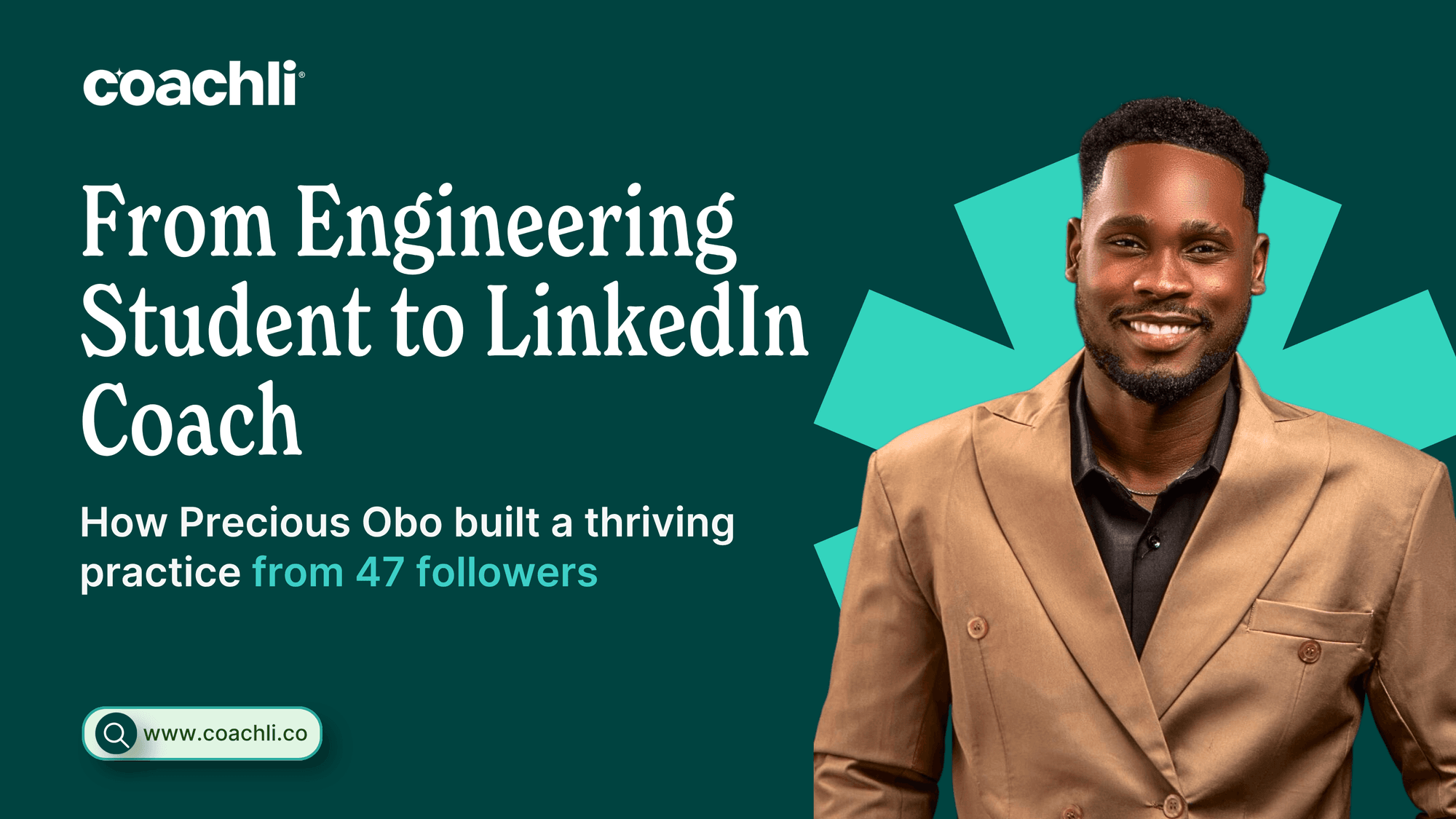
Most LinkedIn success stories start with clarity. It's usually a story of someone who knows what they want to do, posts intentionally and consistently, and then builds from there. Precious Obo's story is different. He did not know what he was building. He was a 200-level engineering student in late 2023 with 47 followers, posting into the void with no strategy, no content calendar, and no idea what he was doing.
Today, he is one of the most trusted voices on LinkedIn for African creators, freelancers, and remote workers, and the founder of The Precious Touch — a coaching and consulting practice that has directly impacted over 19,000 professionals.
The difference between then and now is not as complicated as it may sound so we sat down with Precious to ask the questions we knew our readers wanted answered:
How does someone go from engineering student to LinkedIn authority, even while still in school? What made the difference when nobody was listening? And what would he tell someone right now who is sitting on their expertise, terrified to post?
Here is what he told us.
How did you find your niche? Was showing up on LinkedIn and being a creator your first career choice, or did it find you?
Precious Obo: Honestly? It found me.
I didn't wake up one day and decide, "I want to be a LinkedIn creator." I was a photographer back in 2019. Tried affiliate marketing after that. Learned digital marketing along the way.
LinkedIn wasn't even on my radar until late 2023. I just stumbled into it while trying to figure out how to grow online. My first thought was honestly, "This app is for CEOs and oyinbo people, what am I doing here?"
But I started posting anyway, mostly documenting what I was learning as a student trying to build something. And somewhere in that process, the niche revealed itself. People kept responding to my content about LinkedIn growth, remote work and opportunities. So I leaned into what was already working instead of forcing something I thought "should" work.
Looking back, I think the niche was always inside the struggle. I just had to start showing up before I could see it clearly.
What did your LinkedIn look like when you first started posting, and what made you keep going?
Precious Obo: Omo. It was rough.
I started with 47 followers. My first few posts got maybe 6 likes, and I'm being generous.
There was no strategy. No content calendar. No idea what I was doing. I was just a 200-level engineering student posting into the void.
What made me keep going wasn't confidence sha. It was stubbornness. I genuinely didn't have a backup plan that felt exciting, so quitting wasn't really an option I took seriously. I also had this quiet belief that if I kept documenting my journey honestly, eventually someone would relate to it.
And slowly, people did. One comment here. One DM there. That was enough fuel to keep me showing up even when the numbers weren't encouraging.
What's the one thing that made the biggest difference to your growth on LinkedIn?
Precious Obo: Switching from generic advice to sharing my actual process.
For months I was posting the same tips everyone else was posting. "Be consistent." "Optimize your profile." Nothing wrong with that advice, but it made me sound like everyone else, so there was nothing pulling people toward ME specifically.
The shift happened when I started showing my real work. I landed a client, and I showed exactly how. I got rejected, and I told people why. I got results, I showed the entire process, not just the outcome.
That decision to be specific instead of generic is the single biggest thing that changed my growth. People don't just want to know what to do; they want to see how it actually looks when a real person does it, including the messy parts.
What kind of content gets the most engagement from your audience, and why do you think that is?
Precious Obo: Two types perform consistently best for me: personal story posts and practical case study posts.
The personal stories work because my audience is mostly Nigerian founders, freelancers and remote workers who are tired of generic motivation. When I share something real, people see themselves in it immediately. It's relatable in a way that feels like gist, not content.
The case study posts work for a different reason. They're specific. Instead of saying "case studies build trust," I'll show an actual example, numbers, timeline, and what we did. People trust specifics more than they trust advice.
I think both formats work because they remove the distance between the reader and me. One makes me feel human, the other makes me feel credible. Together, they build the kind of trust that turns a follower into a client.
When did you first make money from your LinkedIn presence, and how did that happen?
Precious Obo: It happened gradually, not overnight. My first real breakthrough came from consistently sharing value and documenting my journey building The Precious Touch. As my following grew and people started seeing the results I was getting, both for myself and for early clients, inbound interest started showing up in my DMs.
I didn't do cold outreach for most of my client wins. People would comment on a post, I'd reply thoughtfully, the conversation would move to DMs, and that's where the actual business conversation happened.
The pattern that worked was always the same: comment thoughtfully, build familiarity, then let the relationship naturally move toward a paid conversation. LinkedIn became less of a content platform for me and more of an inbound sales machine, which is honestly the biggest shift in how I think about the platform now.
What's a mistake you made early on LinkedIn that you wish someone had warned you about?
Precious Obo: Saying yes to everything, especially underpriced work.
As a newbie freelancer, I was so desperate to prove myself that I forgot to value myself. I would charge as little as ₦5,000 for work that should have cost way more. Some brands would ask: "Can you do it for exposure?" Somehow, I'd say yes. Sometimes I'd charge little, deliver the service and still do endless revisions with no extra pay.
The painful part is that the clients who paid the least always demanded the most work. Every single time.
I wish someone had told me that underpricing isn't humility, it's actually self-sabotage dressed up as hustle.
The moment I started saying no to the wrong opportunities was the exact moment the right ones started showing up.
If I had learned that earlier, I would have saved myself a lot of unnecessary stress and burnout.
What would you say to an African creator who's been sitting on their expertise and hasn't posted or shown up yet?
Precious Obo: I'd tell them the same thing I had to tell myself when I had 47 followers and felt like a fraud posting next to people with PhDs.
You don't need credentials to be taken seriously; you need positioning. Nobody is coming to discover you in silence. Your expertise sitting quietly in your head is helping nobody, not even you.
The version of you that's scared to post is protecting comfort, not protecting quality.
Start documenting instead of trying to be perfect. Your first 50 posts aren't for your audience anyway, they're for you, to find your voice and get comfortable being seen.
That's it. That's the whole difference between the people who get discovered and the people who stay invisible.
The Lessons Here
Precious Obo's journey offers some of the clearest lessons about what actually works on LinkedIn.
First, your niche does not have to be clear from the start. He was a photographer who tried affiliate marketing and then stumbled into LinkedIn. The niche revealed itself through what people responded to, not through strategic planning. This is permission for anyone who feels like they have not figured it out yet. Just start documenting what you are learning, and the niche will emerge. Clarity comes with doing, not necessarily from planning and analyzing.
Second, specificity beats generic advice every single time. He spent months posting the same tips everyone else was posting and got 6 likes. The moment he switched to showing his actual process like the client wins, the rejections, the entire journey... everything changed. Generic advice makes you sound like everyone else. Your real process makes you sound like YOU.
Furthermore, you need to understand that the right content removes the distance between you and your audience. Personal stories make you human. Case studies make you credible. Together, they build the trust that turns followers into clients. Not followers into influencers. Into clients.
Fourth, LinkedIn is an inbound sales machine, not a content platform. He did not aggressively sell. He posted, people commented, he replied thoughtfully, conversations moved to DMs, and business happened naturally. The platform worked because he treated it like a relationship-building tool first and a broadcasting tool second.
Fifth, saying no to the wrong opportunities is actually saying yes to the right ones. He was underpricing everything early on because he was desperate to prove himself. The moment he started valuing his work and saying no to underpriced opportunities, the right clients showed up. Underpricing is not humility. It is self-sabotage dressed up as hustle.
Most importantly, Precious's story proves that you do not need a perfect plan, a clear niche, or impressive credentials to build authority on LinkedIn. You need stubbornness. You need honesty. You need the willingness to document your real process instead of pretending that you're perfect.
Precious Obo Is One of the Judges for the Coachli LinkedIn Visibility Challenge
Precious Obo is one of three judges selecting the grand prize winner for the Coachli LinkedIn Visibility Challenge, which runs from June 8 to June 28. He knows what real growth looks like because he has built it from 47 followers. He knows what happens when you post with little or no audience to engage your post. He knows what it feels like to be scared that you do not belong.
He also knows what changes when you decide to show up anyway.
If you have been sitting on your expertise, waiting for the right moment, the Visibility Challenge is that moment. Although we're a few days to the end of the challenge, you can still jump on it. Today can be your Day 1 or you can still keep postponing it till "the future."
Remember, Precious started with 47 followers and self-doubt. Now he has built The Precious Touch into a practice that has impacted over 19,000 professionals and his LinkedIn following has soared to over. He did not need a perfect plan. He needed stubbornness, honesty, and the willingness to show his real process.
You need those same things.